
by Eli Clifton
Editor’s Update: Gorka evidently felt compelled today to respond (via Breitbart) indirectly to our post here about his public display of a Vitezi Rend medal at an inaugural ball and on other occasions. We want to make clear that we respect his devotion to his parents and the commemoration of their experience and suffering. But we in turn are compelled to ask why his father joined a group with a known history of anti-Semitism and collaboration with the Nazis. And why does Gorka himself choose to honor his parents’ memory with a medal issued by Vitezi Rend, which apparently still propagates anti-Semitism and a degree of Holocaust denial, as described in this article published in December 2014 in the Budapest Beacon? It is in this context that Gorka’s defense of the White House’s Holocaust Remembrance Day statement – and its omission of any explicit reference to the fate of European Jews or anti-Semitism – is particularly noteworthy, not to say disturbing.
Just as we asked Gorka to comment on why he wore the Vitezi Rend medal before we published the original post, we would ask him now to explain why his father chose to accept membership in such a group and why, given its distressing historical and contemporary associations, he chooses to honor his parents’ memory in this particular and peculiar way. Eli’s original post commences below.
The White House’s omission of Jewish victims of the Holocaust in its statement for Holocaust Remembrance Day raised objections from Jewish groups across the political spectrum but the Trump administration’s combative defense was perhaps the most surprising move by a presidency facing record low approval numbers. Last Monday, Deputy Assistant to the President Sebastian Gorka refused to admit that that it may have been poor judgment not to specifically acknowledge the suffering of Jews in the Holocaust.
Gorka was an odd choice of proxies for the White House to put forward in defense of its Holocaust Remembrance day statement.
He has appeared in multiple photographs wearing the medal of a Hungarian group listed by the State Department as having collaborated with the Nazis during World War II.
When asked on Monday whether the White House’s Holocaust Remembrance Day statement was “questionable in being the first such statement in many years that didn’t recognize that Jewish extermination was the chief goal of the Holocaust,” Gorka told conservative talk show host Michael Medved:
No, I’m not going to admit it. Because it’s asinine. It’s absurd. You’re making a statement about the Holocaust. Of course it’s about the Holocaust because that’s what the statement’s about. It’s only reasonable to twist it if your objective is to attack the president.
That statement is particularly noteworthy when viewed in the context of Gorka’s apparent affinity for a Hungarian group with a checkered past.
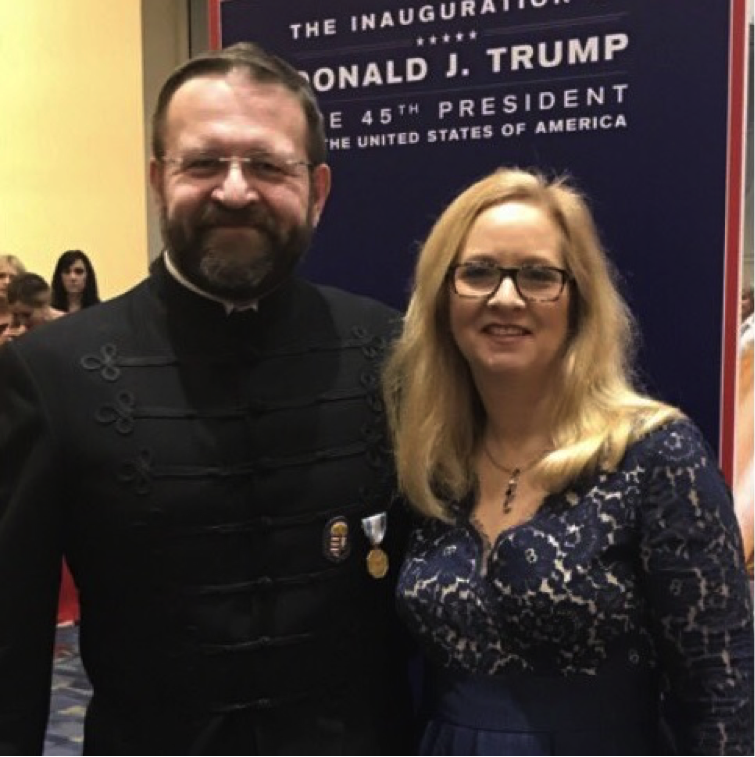
Gorka, who worked in the UK and Hungary before immigrating to the U.S., was photographed at an inaugural ball wearing a medal from the Hungarian Order of Heroes, Vitezi Rend, a group listed by the State Department as taking direction from Germany’s Nazi government during World War II.
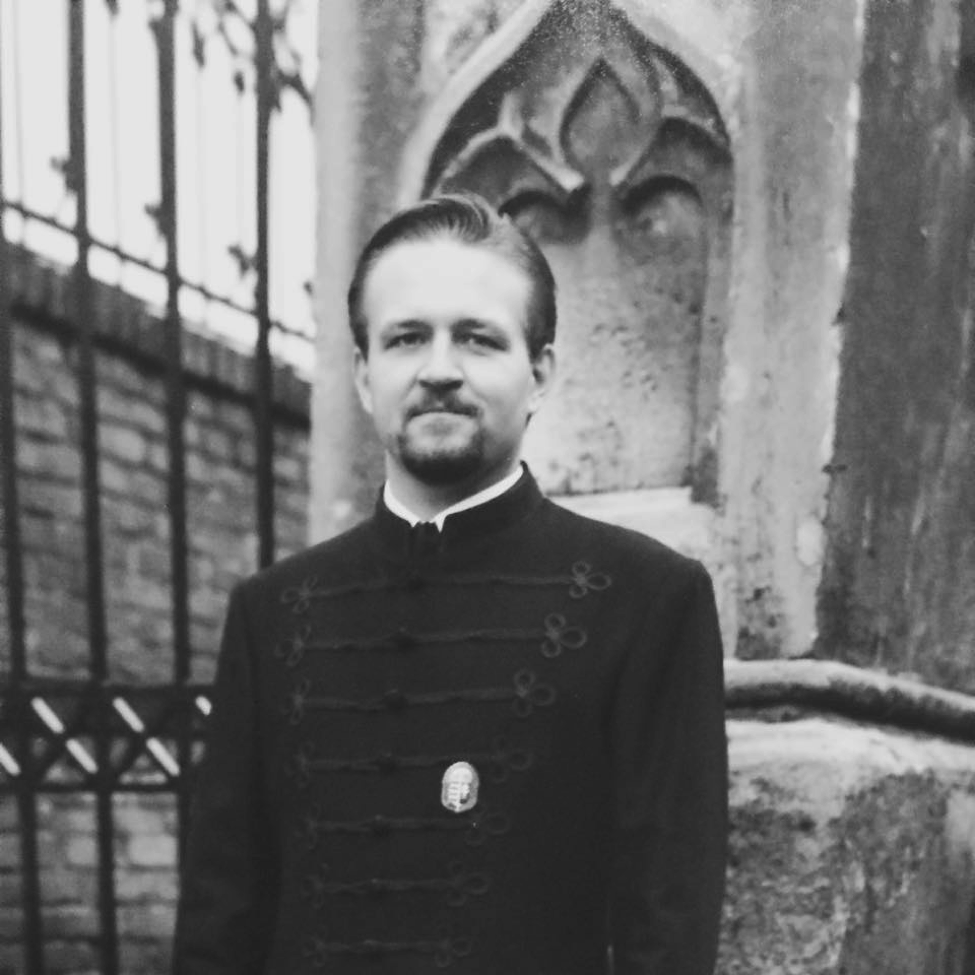
Gorka did not respond to a request for comment but appeared to be wearing the medal on his chest during the Trump inauguration ball and in an undated photo posted on his Facebook page.
Hungarian Collaborators
Eva Balogh, founder of the news analysis blog Hungarian Spectrum and former professor of Eastern European History at Yale University, confirmed to LobeLog the identity of the medal worn by Gorka. She said:
Yes, the medal is of the “vitézi rend” established by Miklós Horthy in 1920. He, as a mere governor, didn’t have the privilege to ennoble his subjects as the king could do before 1918, and therefore the “knightly order” he established was a kind of compensation for him. Officers and even enlisted men of exceptional valor could become knights. Between 1920 and 1944 there were 23,000 such knights. The title was inheritable by the oldest son. I found information that makes it clear that Gorka’s father, Pál Gorka, used the title. However, since he was born in 1930 he couldn’t himself be the one “knighted.” So, most likely, it was Gorka’s grandfather who was the original recipient.
Gorka’s PhD dissertation lists his name as “Sebestyén L. v. Gorka,” which suggests that he is carrying on his father’s title, albeit in an abbreviated format, according to Balogh.
The Order of Vitezi
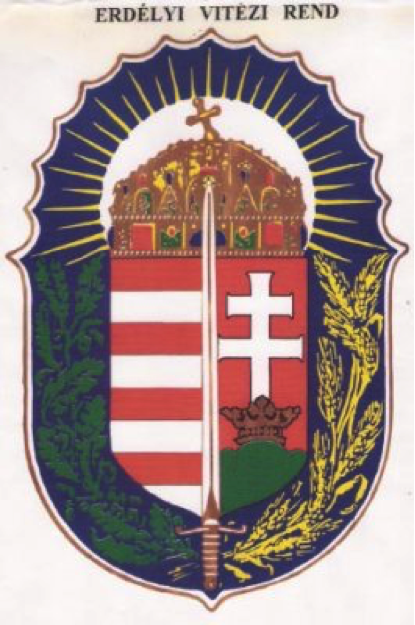
Miklós Horthy, regent of the Kingdom of Hungary from 1920 to 1944, established Vitezi Rend for both civilian and military supporters of Horthy’s government. The group was initially open to non-Jews who served in distinction during World War I.
Although Horthy’s personal views about Jews are still debated, he was explicit in endorsing anti-Semitism even while showing some unease with the pace of the Holocaust. In an October 1940 letter to Prime Minister Pál Teleki, Horthy said:
As regards the Jewish problem, I have been an anti-Semite throughout my life. I have never had contact with Jews. I have considered it intolerable that here in Hungary everything, every factory, bank, large fortune, business, theatre, press, commerce, etc. should be in Jewish hands, and that the Jew should be the image reflected of Hungary, especially abroad. Since, however, one of the most important tasks of the government is to raise the standard of living, i.e., we have to acquire wealth, it is impossible, in a year or two, to replace the Jews, who have everything in their hands, and to replace them with incompetent, unworthy, mostly big-mouthed elements, for we should become bankrupt. This requires a generation at least.
In April 1941, Hungary became a de facto member of the Axis and permitted German troops to cross Hungary for the invasion of Yugoslavia. The first massacres of Jews took place in August when SS troops murdered between 18,000 and 20,000 Jews without Hungarian citizenship after they’d been deported from Hungary to Ukraine.
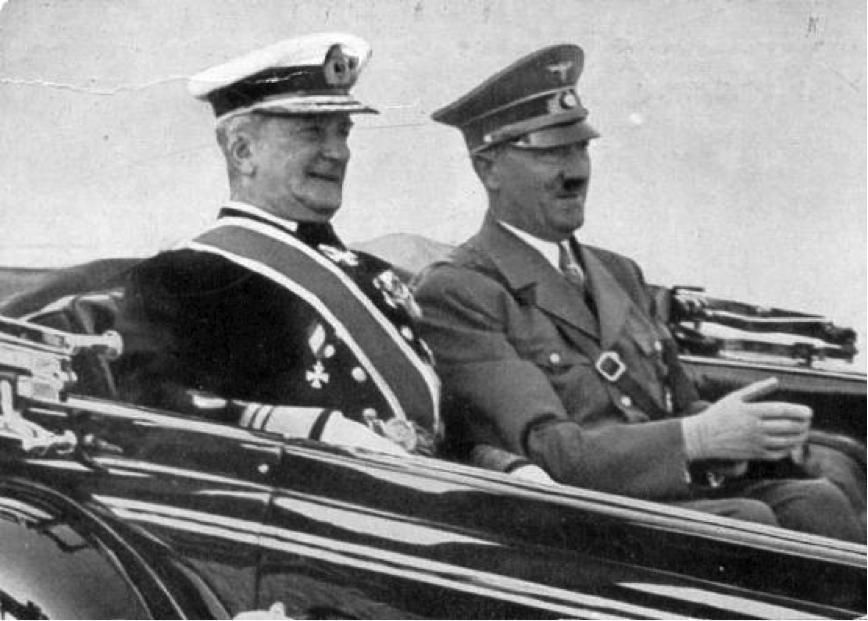
Horthy and Hitler
By 1944, Horthy may have sought to distance Hungary from Nazi Germany but agreed to deport around 100,000 Jews. The German army removed Horthy from office after it occupied Hungary. Horthy’s actual awareness of the fate of Hungarian Jews remains unclear. But reports by journalists and the State Department in 1942 are explicit about the role played and benefits enjoyed by Vitezi Rend’s members.
A Jewish Telegraph Agency report from October 1942, describes how:
Confiscated Jewish real estate in Hungary will be distributed by the government among members of the “Hungarian Order of Heroes” it was announced today over the Budapest radio. The order consists of soldiers who distinguished themselves in the last World War or in the present war.
“In 1942 there was a so-called ‘land reform,’” said Balogh. “It actually meant the expropriation of agricultural lands owned by Jewish citizens. According to government propaganda this move was necessary to ease social tensions in the countryside but as a recent study (2015) shows, most of the land went to “loyal, middle-class supporters of the regime, among them members of the ‘vitézi rend.’”
A Checkered Legacy
The State Department lists the Order of Heroes as an organization that was “under the direction of the Nazi government of Germany.” Membership in such groups during World War II could make individuals ineligible for U.S. visas. The State Department’s website warns that membership in groups under this designation:
[R]enders ineligible for a visa any alien who participated in the persecution of any person because of race, religion, national origin, or political opinion during the period from March 23, 1933, to May 8, 1945, under the direction of or in association with the Nazi Government of Germany or an allied or occupied government.
Vitezi Rend was banned during the Soviet occupation of Hungary but reestablished in exile. The order was awarded to members of the Hungarian diaspora and individuals in Hungary since 1983. Although appearing to largely promote Hungarian culture and the diaspora, it sought foreign donors to help fund the construction of a statue of Horthy in 2011. A fundraising document read, “We have decided after almost seven decades to erect a statue in honor of our beloved Regent and to remember him, therefore we ask for your support!”
“In post-World War II Hungary, no noble titles of any sort can be officially used,” said Balogh. “The ‘knightly order’ no longer officially exists. However, right-wing émigrés kept the order going abroad.”
She later added, “Many supporters of the Horthy regime were enamored by the Nazis and Hitler and the ‘knights’ were especially so. Put it that way, after 1948 one wouldn’t have bragged about his father being a ‘vitéz.’ Lately, however, especially since 2010, it has become fashionable again to boast about such ‘illustrious’ ancestors.”
Horthy, under Hungary’s center-right Prime Minister Viktor Orbán, has undergone a controversial rehabilitation, with squares renamed in his honor and statues erected.
Gorka’s decision to publicly identify with Vitezi Rend raises questions about Trump’s adviser and the administration’s flirtations with anti-Semitism and the alt-right. It’s even more awkward that he’s the person defending the administration’s explicit omission of Jewish victim of the Holocaust from the Holocaust Remembrance Day statement.
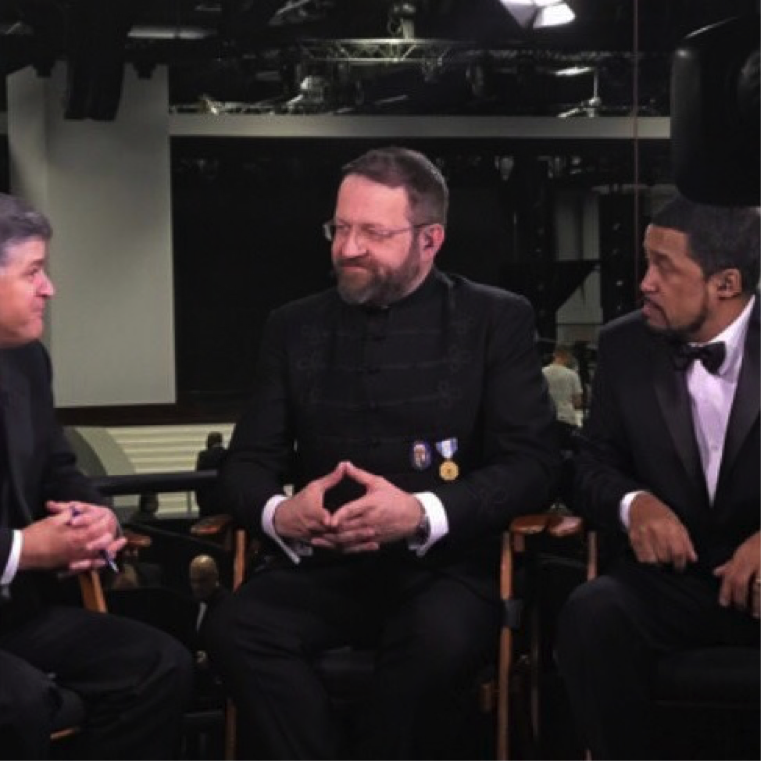
Photo: Sebastian Gorka appearing on Fox News after the inauguration ball.





bastian Gorka, who serves as Deputy Assistant to the President of the United States, as a Nazi sympathizer.
As any of his Breitbart News colleagues could testify, Gorka is not only pro-Israel but “pro-Jewish,” and defends both against the threat of radical Islamic terrorism.
But facts do not matter to the left and the mainstream media in their efforts to frighten the public and harass the administration.
The ridiculous accusation is based on a medal that Gorka was seen wearing at an inaugural ball. Eli Clifton of the LobeLog blog wrote on Sunday that Gorka “has appeared in multiple photographs wearing the medal of a Hungarian group listed by the State Department as having collaborated with the Nazis during World War II.”
Clifton notes that the medal is associated with a military order, the “Hungarian Order of Heroes, Vitezi Rend” created after the First World War.
He goes on to speculate (wrongly — see below) that the medal could have been won by Gorka’s grandfather. The order, he adds, was later associated with Hungary’s Nazi-aligned government during the Second World War, and later banned by the Soviets. But Clifton notes: “The order was awarded to members of the Hungarian diaspora and individuals in Hungary since 1983.”
Clifton does not bother to report why the order was awarded then, or even why the “Hungarian diaspora” existed in the first place; he shows no interest in the order as an anti-communist symbol, merely noting that the Soviets banned it.
And of course Clifton offers no evidence — none at all — that Gorka, or his antecedents, had any kind of empathy for the Nazi regime or its views.
Clifton could have consulted Gorka’s book, Defeating Jihad: The Winnable War, to know more about his background. His father grew up during the Nazi siege of Budapest and later joined the anti-communist resistance. He was betrayed by Kim Philby, a British double agent for the Soviet Union, arrested and tortured.
Talking Points Memo, while echoing Clifton’s false attack on Gorka, notes that it was Gorka’s father who won the award, which by then was an anti-communist symbol: “Gorka’s late father, Paul, fled Hungary for the United Kingdom during a failed 1956 revolt against the Soviet-imposed government. The flyleaf of Paul Gorka’s book ‘Budapest Rising’ identifies him as a recipient of the Order of Vitéz ‘for his bravery during the Resistance’” — i.e. the resistance against Soviet communism, which Gorka discusses in his book.
Ironically, when Eli Clifton was at the left-wing Center for American Progress, he himself was involved in a damaging scandal about antisemitism at its ThinkProgess blog in 2011-2012. At the time, the Jerusalem Post noted: “The Simon Wiesenthal Center, the Anti-Defamation League and the American Jewish Committee have all termed the anti-Israeli rhetoric of Jilani and fellow CAP writers Eli Clifton, Ali Gharib, Matt Duss and Ben Armbruster to be infected with Jew-hatred and discriminatory policy positions toward Israel.”
So it is unclear why Clifton’s false accusations of Nazi ties are being treated as credible. (Clifton is now a reporter at the Nation Institute, a non-profit associated with the left-wing magazine.)
Clifton’s slander was picked up by the Southern Poverty Law Center, retweeted by Chelsea Clinton, reiterated by left-wing publications like Talking Points Memo, and elevated by mainstream sources like the Times of Israel and Ron Kampeas of the Jewish Telegraphic Agency. None bothered to check the underlying claim of Gorka’s alleged Nazi sympathie
This is indeed a hack job!
The author sees what he wants to see. I OTO see a total hit job. That’s my opinion.
Whatever the origins: Isn’t it disturbing that a son is wearing his father’s medal? In a public office? Representing the american people? It’s great he is proud of his parents, everyone should be, but wear it in private then. If there is even a hint of controversy, don’t wear it in function at all. Diplomatically this is a punch in the face, underwriting my assumption that the Trump administration has no respect for the office of the presidency or the american people.
Your sad smear isn’t working Eli.
In fact, even the article you linked to, says that “Vitézi Rend was in an open confrontation with the Arrow Cross Party and many other pro-Nazi paramilitary organizations in Hungary”