
by Mitchell Plitnick
There was a lot to digest in the joint press conference held by US President Donald Trump and Israeli Prime Minister Benjamin Netanyahu last week. Most of the focus has been on the apparent walk-back Trump made from the long-term and bipartisan US policy supporting a two-state solution to the Israel-Palestine conflict and Netanyahu’s shocking apologia for Trump’s refusal to address the sharp rise in antisemitism since his election.
Another point of real significance has therefore been squeezed out of the spotlight: Netanyahu’s proposal that the US recognize Israeli sovereignty over the Golan Heights.
Netanyahu said that Trump was not surprised by the request. This suggests that the idea is at least being considered in Washington. That should also not surprise us. The situation in Syria clearly precludes any agreement on the Golan issue in the near term, and the US recognition of Israeli sovereignty over the small patch of land would be a huge political coup for Netanyahu.
As with most things concerning Israel, the devil is in the details. The Golan is not often discussed these days. The bloody conflict in Syria has eliminated any talk of a “Syrian track” for diplomacy involving Israel. It is, therefore, reasonable to wonder how much serious consideration this question has even gotten from the soberer officials in the Trump administration, let alone from other, more passionate, voices.
Any realistic look at this question, however, leads to the conclusion that there is no good reason for the United States to agree to Netanyahu’s request. It accomplishes nothing. And it can have extremely dangerous ramifications.
Hauser’s Flawed Analysis
In the pages of the Israeli daily, Haaretz, the former secretary of Netanyahu’s cabinet, Zvi Hauser, makes an unconvincing case for recognition. To counter Iran’s regional ambitions and as a bulwark against an expanding ISIS, Hauser argues, Israel needs a permanent buffer with Syria. “Above all, reality on the ground is stronger than past fixations,” he writes. “There is no horizon on the Golan Heights but the Israeli one. Neither radical Sunni factions and organizations nor an Iran-Hezbollah-Assad foothold in the Kinneret will allow for stabilizing the region and rehabilitating it.”
The problem with this argument is that it makes the case for maintaining Israeli control over the Golan not for making the annexation permanent. In a climate where no one is seriously talking about a Syria-Israel deal, recognizing the Israeli annexation of the Golan does nothing to change the calculus Hauser is discussing.
Hauser also claims that “moderate Sunni axis states won’t fight a move that means exacting a territorial price from the Shi’ite axis of evil.” In this he is simply wrong.
While the leadership in the states Hauser refers to (although “moderate” is an odd term to apply to Saudi Arabia, Egypt and other dictatorships, whose sole claim to moderation is their status as US and sometimes covert Israeli allies) might indeed privately welcome a blow to the Assad regime and its partners in Tehran, they cannot do anything but publicly oppose an American imprimatur on the Israeli annexation of land taken in the 1967 war. Even if they were passionately opposed to the move, their options would be limited at best.
US recognition of Israel’s annexation of the Golan would immediately enflame passions throughout the region and would be the most powerful recruitment tool yet for the Islamic State, al-Qaeda, and other, similarly-minded groups. The Arab world would see this annexation as conclusive evidence of the “imperialist designs” the United States has on the region and the “Zionist regime’s” aggression. It would also reinforce the rationale for fighting Assad, the only leader so weak that he has permanently lost sovereign territory to Israel (recall that the West Bank and Gaza were occupied by Jordan and Egypt, respectively, from 1948-1967).
But Hauser does eventually get around to the crux of the matter. “Israel is in an optimal time and place to make historical achievements consisting mainly of revoking the ‘sanctity’ of the ‘67 borders, internalizing the need to change borders in the area and redrafting them according to current reality,” he writes.
The “internalizing” he speaks of is not, of course, referring to Israelis, but to the rest of the world.
Indeed, US recognition of Israeli sovereignty in the Golan would set an historic precedent and would represent such an enormous achievement for Netanyahu that his current political troubles would vanish. But it would do a lot more than that.
As Hauser notes, US recognition would formally break the international consensus on the inadmissibility of acquiring land by conquest, something that has been the bedrock of international law and diplomacy since the formation of the United Nations. It has also been the foundation of the two-state solution and the various partition plans that preceded it.
Dire Consequences
Palestinians generally ignore the Golan because the non-Israeli population there is Syrian, not Palestinian. But US recognition will force them to take the Golan into account in their strategy, further complicating an already hopelessly tangled mess. More importantly, it will also mean that the Palestinians will likely harden their stance, leading to increased support for violent remedies to what will then be an even more hopeless situation of occupation.
Russia may well veto de jure annexation. Trump, whether one believes he is in troubling cahoots with Vladimir Putin or merely wants to improve relations with the Eurasian bear, is unlikely to grant Netanyahu’s request over Russian objections. If Russian acquiesces, Putin will want a quid pro quo. But Putin will not simply accept a US move that harms his allies in Damascus and Tehran just to bolster Netanyahu’s position.
Netanyahu is likely to pursue U.S. recognition if Trump does not reject the idea outright, as Barack Obama did in 2015. Just by raising the request, he scores political points and the grand prize is just too great for him to ignore. Proponents of international law and others deeply concerned about the region might be vocal in opposing this idea, but the Golan is not going to stir the passions the West Bank does. Netanyahu’s proposal, however, is very dangerous, and the public should be aware of the potential consequences.
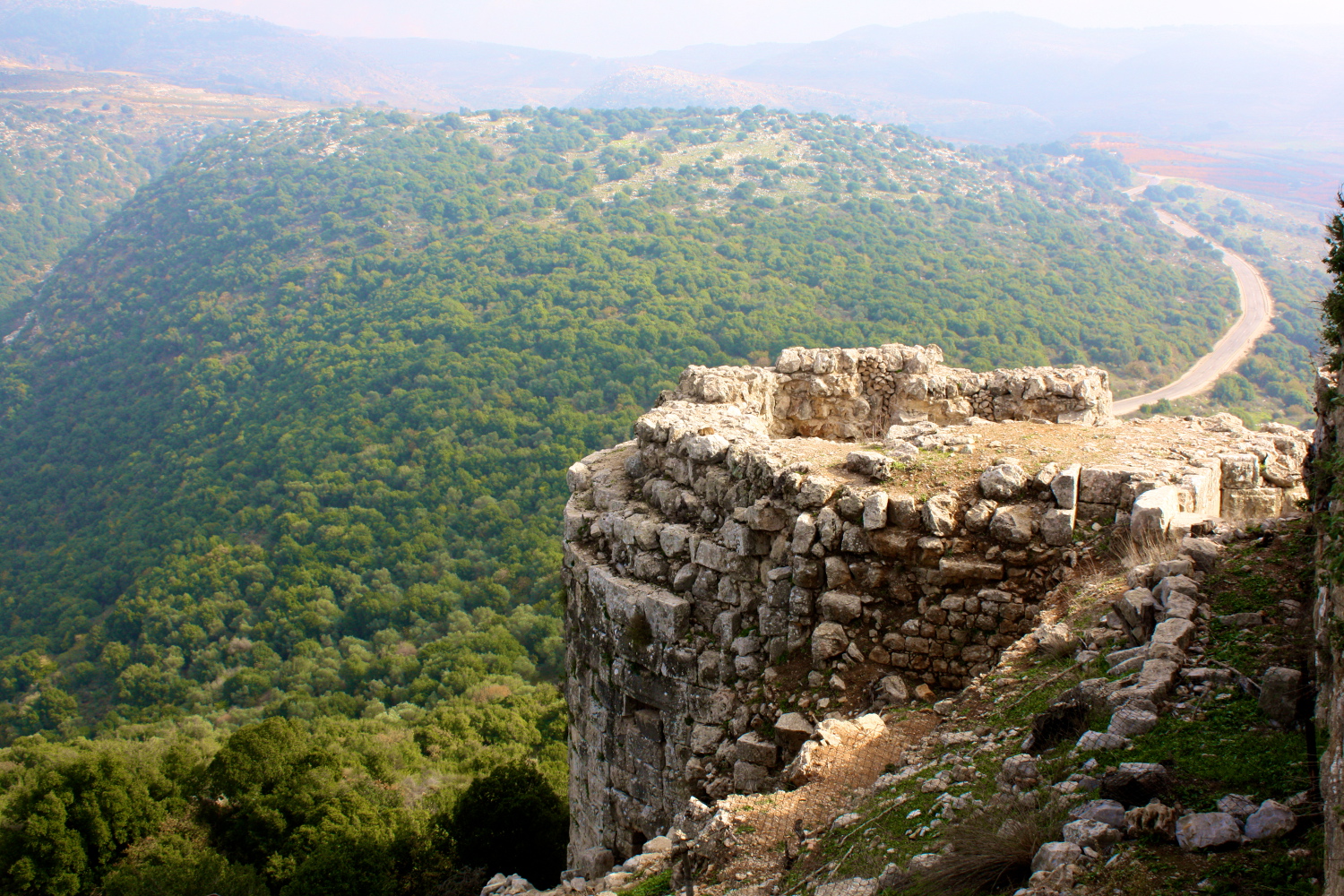
Photo of Golan Heights courtesy of Wikimedia Commons





James, I have heard rumors of that although nothing confirmed as to how far the talks went. In hindsight, if Israel had done that and then 5 years later the Syrian civil war broke out, Israel would be in a lot worse situation with ISIS sitting in the Golan Heights. Ironically, Israel probably would have had to reconquer the Golan.
Even when Egypt went through its Morsi phase, there was concern that giving up the Sinai may have been a huge mistake. That is part of the problem of making a peace treaty with an Arab dictatorship.
Now, it is hard to imagine if and when Israel could trust any treaty with Syria.
Finally, has already annexed the Golan. If Israel decides in the future to return Golan to Syria as part of some “deal,” that’s there business. All I am saying is the annexation should be recognized as fact by Israel’s allies. Major changes in Arab and Muslim culture are probably going to be required before Israel can cede more land to any Arab country.
JW Israel’s allies will do well to avoid rewarding Israel for continuing its occupation of the GH and WB for many decades. Sticking point in the near-deal with Syria, in 2008, was Israel’s attempt to retain the shoreline of the Sea of Galilee, and all of the water rights.
JC, you don’t know what the sticking point was…you are just speculating as that type of information is not public. Clearly, the idea was to break Syria away from Iran. No way would Israel return the Golan Heights and then let Iranian troops operate there. I speculate, like you, that Syria was not willing to jettison Iran.
Anyway, it would be nuts for Israel to give up access to the Sea of Galilee, it’s major fresh water lake. Israel is going to hold onto exclusive control of the Sea of Galilee for the foreseeable future. Maybe in 100 years if there is some sort of “Middle East Union” things might be different. Let’s focus on the real world for now.
Israel’s allies, while not recognizing the annexation are not stupid. They are going to keep rewarding Israel as you put it because we (the American people) like Israel and we don’t like Syria at all and Arabs very much. We Americans are also quite used to seizing territory from other countries and really have no problem with it in the right circumstances. Yes, you will find ivory tower professors and other leftists pontificate endlessly about so-called “international law” but the average American doesn’t care. Just like the average American has no problem with torture under the right circumstances and no problem with deporting illegal immigrants.
We should support the annexation of the Golan for a very practical reason, not just to help an ally. It will send a powerful message to Syria. You already lost the Golan so you better make peace with Israel or it could get a lot worse.
One of the colossal problems in the USA (before Trump that is) and in Europe is a complete lack of understanding of the Arab World and the Arab mentality. They are all dictatorships, they only respect strength and they don’t trust their own people.
The same logic applies to the Palestinians. They have blown so many opportunities because of this same mentality. They need to know they are on the edge of the precipice. Their chance to cut a deal with Israel will soon be gone and their future will be determined for them. Trying to apply Western standards of morality and “playing nice” don’t work in the Arab world. We tried to democratize Iraq & Afghanistan and it was a disaster. Obama sided with Morsi who supposedly was democratically elected and it was another disaster. Now we side with the military strongman El-Sisi.
JW I can assure you I am correct in stating the “sticking point”. Syria simply wanted to shoreline of the Sea of Galilee, adjacent to the Golan. No issue of Israel’s not retaining its own shoreline. Syria was not likely eager to entertain the stationing of Iranian forces (of whatever kind) in the Golan. Assad would have preferred to pursue economic development, having achieved the peace deal.
JC, If Syria shared the shoreline then it would share the Lake, which means any use would be subject to joint negotiations. That level of trust and cooperation would require a completely different Syria than than the one that existed then and certainly than the one that exists now. You say Assad would prefer economic development, that means joint development with Isael. Very hard to imagine.
The USA and Japan were bitter enemies and now are close allies but they were only enemies for a few years and before that there was no history of animosity. Same with Germany. I am grappling to come up with scenarios where bitter enemies for many decades become close enough friends to share an important water resource….without one of them thumping the other so badly that the other basically gave up.
Do you have an examples?